
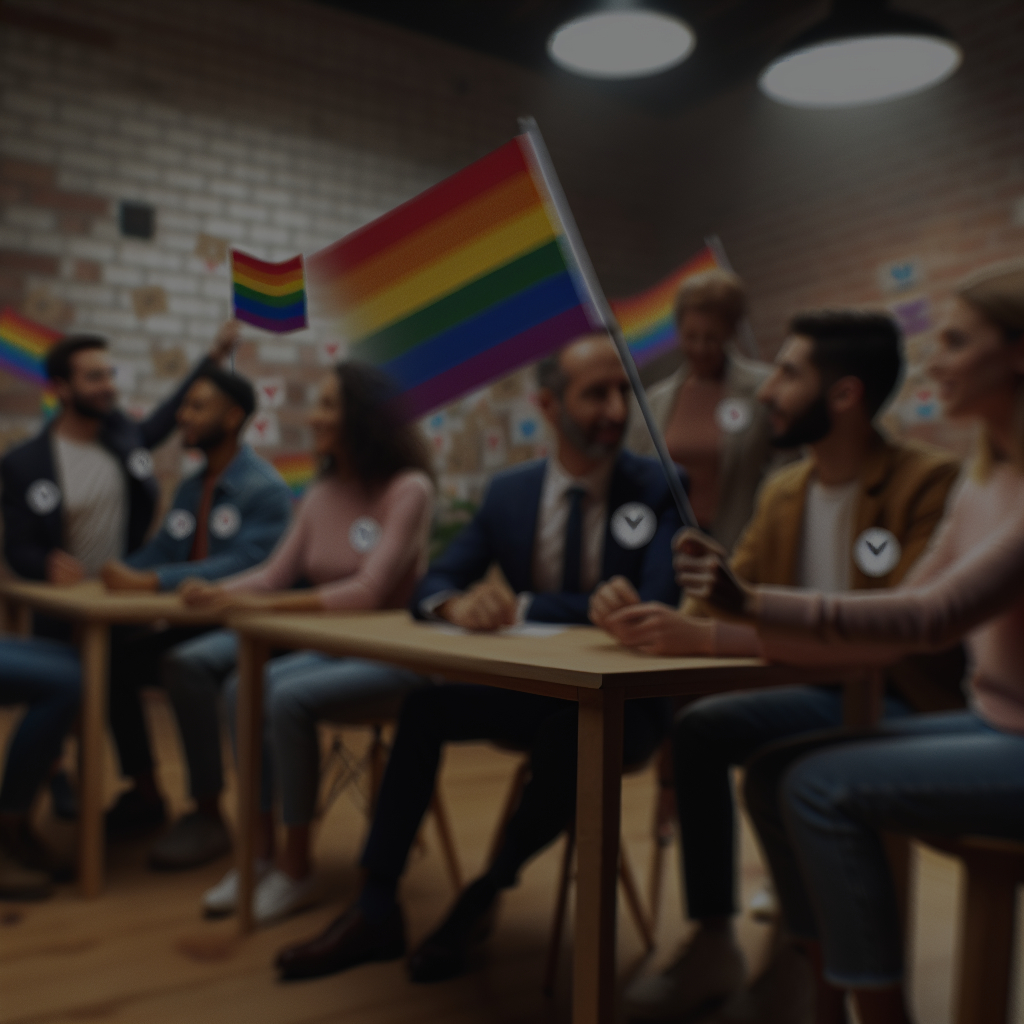
A Strong Rejection of Anti-LGBTQ+ Rhetoric at the Ballot Box
Recent U.S. elections delivered a clear message: voters are turning away from divisive political tactics, especially those targeting transgender individuals and the broader LGBTQ+ community. Across the country, election results demonstrated increasing support for Democratic candidates who proudly champion LGBTQ+ rights.
In a historic win, Abigail Spanberger became Virginia’s first female governor. Over in New Jersey, Mikie Sherrill—long recognized for her advocacy of LGBTQ+ issues—was also elected governor. These electoral victories highlight a growing shift toward leadership rooted in inclusion, empathy, and substance over fear-mongering.
Zohran Mamdani: A New Era in Leadership
One of the most symbolic outcomes of this election cycle came from New York City, where Zohran Mamdani made history as the city’s first Muslim mayor and its youngest since 1892. At just 34, Mamdani delivered a powerful victory speech in Brooklyn, reaffirming his commitment to progressive values. He stated:
“Here, we stand for the people we love — whether you’re an immigrant, trans, single mother, a Black woman unjustly fired by Donald Trump, or simply someone trying to make ends meet.”
His message emphasized solidarity and inclusion, signaling that his administration will be deeply anchored in social justice and advocacy for marginalized groups—including LGBTQ+ individuals often overlooked in mainstream politics.
Reframing the Political Narrative Around Inclusion
This election season directly challenged the belief that anti-LGBTQ+ rhetoric wins votes. Civil rights organizations hailed these results as a defining moment. Sarah Kate Ellis, President of GLAAD, emphasized that American voters made their priorities clear:
“Voters are rejecting divisive politics that target LGBTQ+ people. They want leaders who actually focus on what matters: family, freedom, fairness, and everyday life.”
GLAAD noted that the success of politicians like Mamdani lies in their ability to weave LGBTQ+ rights into larger conversations involving healthcare, environmental policy, and economic challenges. These rights aren’t viewed as niche issues—they’re becoming essential elements of a broader vision for a fairer society.
Ellis, a New York native, also pointed to Mamdani’s victory as a reflection of the public’s hunger for principled leadership—one that prioritizes justice and dignity over political calculation, in stark contrast to past administrations like that of Andrew Cuomo.
Voters Reject Hate-Based Campaign Strategies
One of the most revealing contrasts came in Virginia, where Republican candidate Winsome Earle-Sears spent nearly $2 million weekly on transphobic attack ads. Despite the massive investment, her strategy fell flat. Earle-Sears captured only 44.5% of the vote, losing to Spanberger, whose campaign centered on economic reforms and strengthening public services—issues that resonate more deeply with voters.
Polling data backs this up. An April Gallup survey found that voters ranked the economy (60%), healthcare (59%), and inflation (56%) as top concerns. LGBTQ+ rights, while important, were a core issue for just 1% of respondents—indicating that hate-fueled strategies are increasingly out of step with public sentiment.
Kelley Robinson, President of the Human Rights Campaign, summarized it succinctly:
“Voters weren’t fooled by millions spent on cruel, transphobic ads. They want leaders who improve lives, not purveyors of hate and chaos.”
Global Implications: A Ripple of Hope Beyond Borders
America’s election outcomes are reverberating far beyond its shores—bringing encouragement to LGBTQ+ and trans communities in places like Quebec and Europe, where similar battles for equality persist. Voter rejection of toxic political narratives offers a powerful symbol of hope in an increasingly polarized global landscape.
This emerging political shift suggests a desire for more compassionate, inclusive governance—not just in the U.S., but internationally. It may signify the beginning of a new chapter where justice, unity, and empathy emerge as transformative forces in politics worldwide.
Explore more insightful coverage and analysis on the evolving intersection of politics and LGBTQIA+ rights.
