
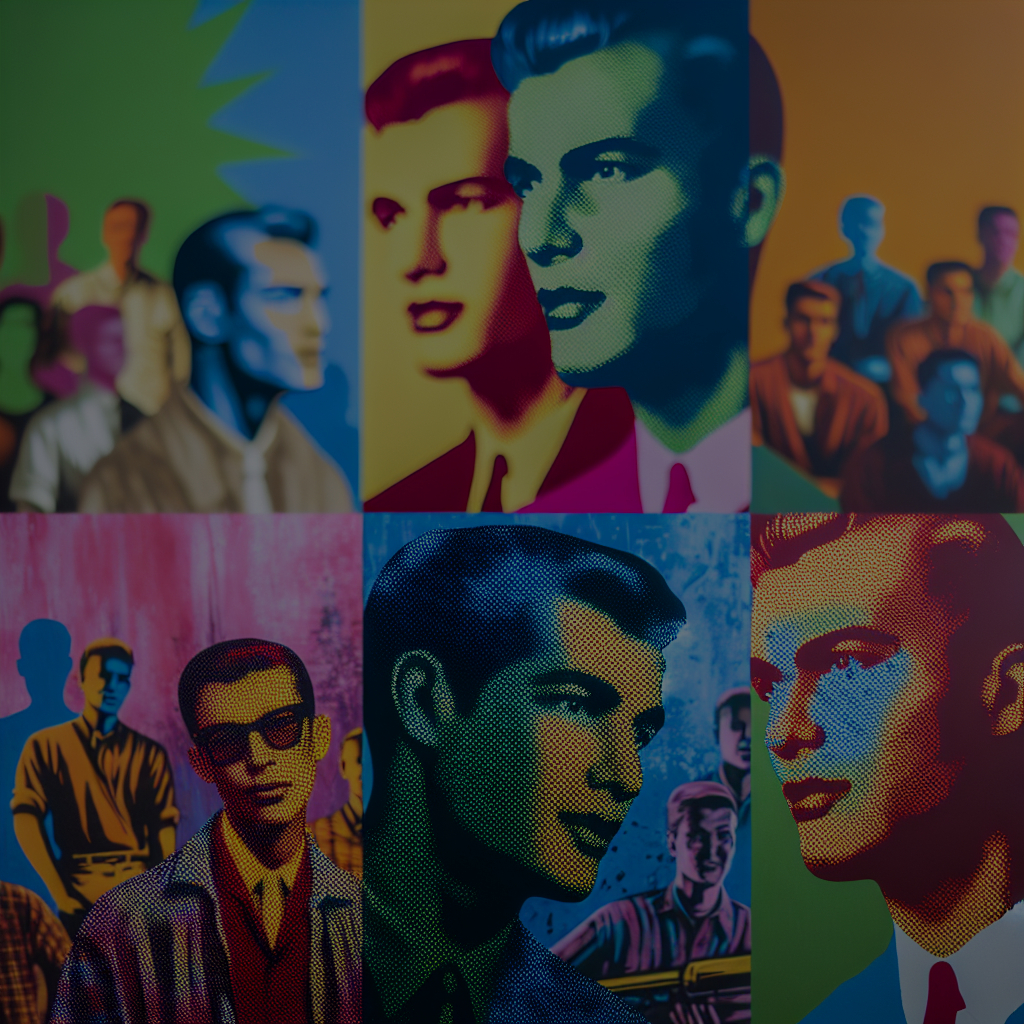
Andy Warhol and LGBTQ+ Representation
A bold visionary and cultural trailblazer, Andy Warhol embodied the spirit of a rapidly evolving American society—where celebrity obsession, mass media, and personal identity collided. Born into a working-class family in Pittsburgh, Warhol infused his personal experiences and unique worldview into art that still resonates today. From iconic Campbell’s soup cans and glamourized Marilyn Monroe portraits to his immersion in underground queer art scenes, Warhol redefined what could be considered art. Through his trailblazing use of silkscreen printing and appropriation of commercial imagery, he blurred distinctions between fine art and advertising—elevating the everyday while challenging viewers to question consumerism, fame, and queer identity in 1960s New York.
Quick Overview
- Andy Warhol revolutionized 20th-century art by incorporating household items and celebrities into his groundbreaking Pop Art style.
- Innovative silkscreen techniques highlighted the mechanical nature of consumerism while redefining art and originality.
- Works like the Campbell’s soup cans and Marilyn Monroe series explore fame, mortality, and image-driven culture.
- Warhol’s influence continues to shape visual art, music, LGBTQ+ culture, and fashion in 2025 and beyond.


Warhol’s Pop Art Mastery and Artistic Innovation
Andy Warhol’s emergence in the 1960s marked a turning point in contemporary art. He famously declared commercial products and celebrities worthy subjects for fine art, turning supermarket items into cultural icons. His adoption of silkscreen printing transformed the creative process—mirroring industrial mass production and intentionally stripping images of traditional painterly touches. This method captured the repetitive nature of consumerism itself, turning art into commentary.
Warhol’s genius lay in his ability to reframe the everyday. His repeated motifs, flat colors, and deliberate detachment provoked audiences to confront deeper themes: What value do we assign to art? To celebrity? And how much of identity is shaped by repetition in a media-saturated world?
| Artistic Element | Warhol’s Use |
|---|---|
| Silkscreen Printing | Industrial method repurposed for fine art creation |
| Commonplace Items | Elevated familiar products like soup cans to iconic artworks |
| Pop Culture | Portraits, ads, and movie stars became cultural commentary |
| Repetition | Challenged originality and celebrated mass production |
Blurring Boundaries Between Popular Culture and High Art
Warhol’s breakthrough moment came in 1962 at LA’s Ferus Gallery, where he debuted “32 Campbell’s Soup Cans.” Each canvas displayed a different soup flavor in near-identical format, mimicking retail aisles while reframing consumer product design as modern art. This was not just provocative—it dismantled long-standing barriers between commerce and creativity.
- Introduced a new artistic language built on familiarity, branding, and mass appeal.
- Reimagined gallery spaces as reflections of consumers’ visual realities.
- Quietly embedded LGBTQ+ narratives within mainstream visual culture.
These soup can pieces, once dismissed by critics, now stand as emblematic of Warhol’s paradoxical genius: honoring the banal while inviting deep cultural introspection.
Exploring Warhol’s Most Iconic Works and Their Cultural Impact
Several Warhol creations have become permanent fixtures of modern visual heritage. His famed “Marilyn Diptych” (1962) comprises 50 silk-screened images—half vividly colored, half faded to monochrome—illustrating the tension between stardom and decay. Through portrayals of celebrities like Liz Taylor and Elvis Presley, Warhol elevated them into semi-divine figures of a media-worshipping era.
| Artwork | Subject | Technique | Year | Cultural Message |
|---|---|---|---|---|
| Campbell’s Soup Cans | Grocery staple | Silkscreen | 1962 | Democratized the art world |
| Marilyn Diptych | Marilyn Monroe | Silkscreen, color/monochrome | 1962 | Explored fame and impermanence |
| Flowers | Colorized blooms | Silkscreen | 1964 | Contrasted beauty with artificiality |
| Electric Chair | Death chamber imagery | Silkscreen, muted tones | 1967 | Powerful protest against capital punishment |
| Mao Series | Mao Zedong | Silkscreen | 1972 | Satirized political iconography |
Silkscreening Fame and Commentary in a Media-Driven World
Warhol’s repetitive technique did more than mimic factory production—it questioned what it meant to be original in a society obsessed with images. By transforming Marilyn Monroe, Mao Zedong, and even electric chairs into recurring motifs, he created cultural mirrors that both seduced and unsettled. His work echoes Guy Debord’s theory of the “spectacle,” where image overtakes reality, and fame becomes identity.
- Repeated celebrity images blurred the line between subject and commodity.
- The “Electric Chair” series revealed societal desensitization to institutional violence.
- Mao portraits explored the aesthetics of propaganda and mass influence.
Through this lens of glamour and critique, Warhol held a mirror up to society’s obsession with fame, fear, power—and the artificial constructs of identity itself.
The Factory, Collaborations, and Warhol’s Cultural Legacy
Warhol’s influence extended well beyond painting. His legendary studio, The Factory, was a melting pot of art, queerness, counterculture, and innovation. More than just a creative space, it became a sanctuary for LGBTQ+ artists, drag performers, musicians, and avant-garde thinkers in a time of social conservatism. Within its walls, art fused with lifestyle, and boundaries continued to dissolve.
Warhol’s collaboration with The Velvet Underground further cemented his legacy across media. As producer and designer of their iconic banana-covered debut album, he merged art and rock music into a single, provocative form of expression. The multimedia performances and gender-bending performances at the Factory were forebears of modern drag culture and immersive installation art.
- Bridged music, fashion, film, and performance art under one rebellious umbrella.
- Nurtured queer and marginalized voices within a vibrant, unapologetic creative space.
- Influenced pop culture trends, visual branding, and LGBTQ+ artistic expression well into the 21st century.
Ultimately, Andy Warhol not only changed how we view art—but also how we understand identity, fame, and visibility. His unapologetic celebration of queerness, his embrace of commercial culture, and his relentless pursuit of visual innovation continue to shape contemporary art and LGBTQ+ representation in powerful and lasting ways.
