
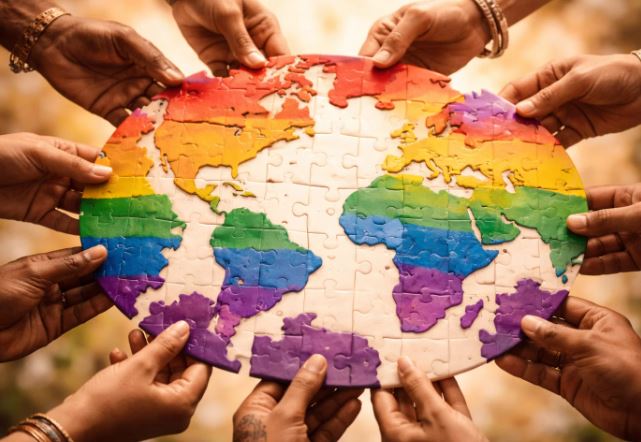
🌍 LGBTQ+ Rights Worldwide: Global Progress, Challenges, and Inequalities
Around the world, LGBTQ+ rights remain deeply unequal. While some countries have established strong legal protections and social recognition for LGBTQ+ people, others continue to enforce discriminatory laws or deny basic rights altogether. Understanding LGBTQ+ rights worldwide requires looking beyond headlines to examine long-term legal frameworks, cultural contexts, and international human rights standards.
This page provides a global overview of LGBTQ+ rights, highlighting where progress has been made, where inequalities persist, and why the situation varies so widely from one country to another.
Understanding LGBTQ+ Rights on a Global Scale
LGBTQ+ rights generally refer to the legal and social recognition of sexual orientation, gender identity, and gender expression. These rights may include protection from discrimination, access to healthcare, freedom of expression, family recognition, and personal safety.
However, LGBTQ+ rights are not universally defined or enforced. In many regions, protections exist on paper but are inconsistently applied. In others, LGBTQ+ identities remain criminalized or socially stigmatized despite international pressure.
Countries with Strong Legal Protections for LGBTQ+ People
Several countries have implemented comprehensive legal frameworks supporting LGBTQ+ equality. These protections often include anti-discrimination laws, marriage equality, gender recognition policies, and hate crime legislation.
In these regions, legal progress has typically been driven by:
- constitutional protections
- court rulings
- sustained activism
- alignment with international human rights standards
While legal equality does not automatically eliminate discrimination, it plays a crucial role in improving safety, visibility, and access to justice for LGBTQ+ communities.

Regions Where LGBTQ+ Rights Remain Unequal or Fragile
In many parts of the world, LGBTQ+ rights remain limited, contested, or unevenly enforced. Even within countries that recognize certain rights, protections may vary by region, political leadership, or cultural norms.
Common challenges include:
- lack of legal recognition
- weak enforcement of existing laws
- social hostility despite legal protections
- political reversals following elections or regime changes
These disparities highlight the fragile nature of progress when legal systems are not supported by broader social acceptance.
International Organizations and LGBTQ+ Human Rights
International institutions and human rights organizations play a significant role in shaping global LGBTQ+ rights discourse. Through reports, resolutions, and legal advocacy, they help document abuses, promote best practices, and apply pressure on governments.
While international influence can encourage reform, its effectiveness often depends on domestic political will and civil society engagement. Progress is rarely linear and frequently faces resistance.
How LGBTQ+ Rights Have Evolved Over Time
Over the past decades, LGBTQ+ rights have undergone significant transformation in many countries. Decriminalization, recognition of same-sex relationships, and expanded gender rights reflect broader social shifts.
However, this evolution has not followed a single path. Some countries have advanced rapidly, while others have experienced stagnation or regression. Understanding this historical context is essential to grasp why global LGBTQ+ rights remain so uneven today.
Why LGBTQ+ Rights Vary So Widely Between Countries
The global variation in LGBTQ+ rights is shaped by multiple factors, including:
- political systems
- religious and cultural traditions
- colonial legal legacies
- media narratives
- economic and social stability
These elements interact in complex ways, making each national context unique. As a result, strategies that work in one country may not translate directly to another.
Ongoing Global Challenges for LGBTQ+ Communities
Despite progress in many regions, LGBTQ+ communities worldwide continue to face significant challenges. These include discrimination, violence, limited access to healthcare, censorship, and legal uncertainty.
Even in countries with strong legal protections, LGBTQ+ people may encounter barriers rooted in social attitudes rather than laws themselves. Addressing these challenges requires sustained legal reform, education, and community support.
Staying Informed About LGBTQ+ Rights Worldwide
Because LGBTQ+ rights continue to evolve, staying informed is essential. Legal changes, court decisions, and social movements regularly reshape the global landscape.
To follow ongoing developments, analyses, and verified updates, you can explore our dedicated hub covering current events and legal changes related to LGBTQ+ communities around the world:
👉 LGBTQ+ news and global updates on LGBTQ+ rights